Mistral AI: Pioneering the AI Landscape in Europe

Mistral AI is a European startup
that is rapidly gaining attention in the field of large language models
(LLMs). Founded in 2023 in Paris, the company has quickly established itself as one of the most important
challengers to American giants like OpenAI, Anthropic, and Google DeepMind.
What makes Mistral unique is its commitment to
open-source, efficiency, and European digital sovereignty. At a time when most powerful AI models are
closed, expensive, and controlled by a handful of US tech companies, Mistral
offers an alternative vision: powerful, transparent, and community-driven.
In this article, we will dive into the origins of Mistral, explore its models
such as Mistral 7B and Mixtral 8x7B, explain its
architecture, present its advantages and limitations, and discuss why it represents a turning point for European
AI.
- Origins and Mission of Mistral AI -
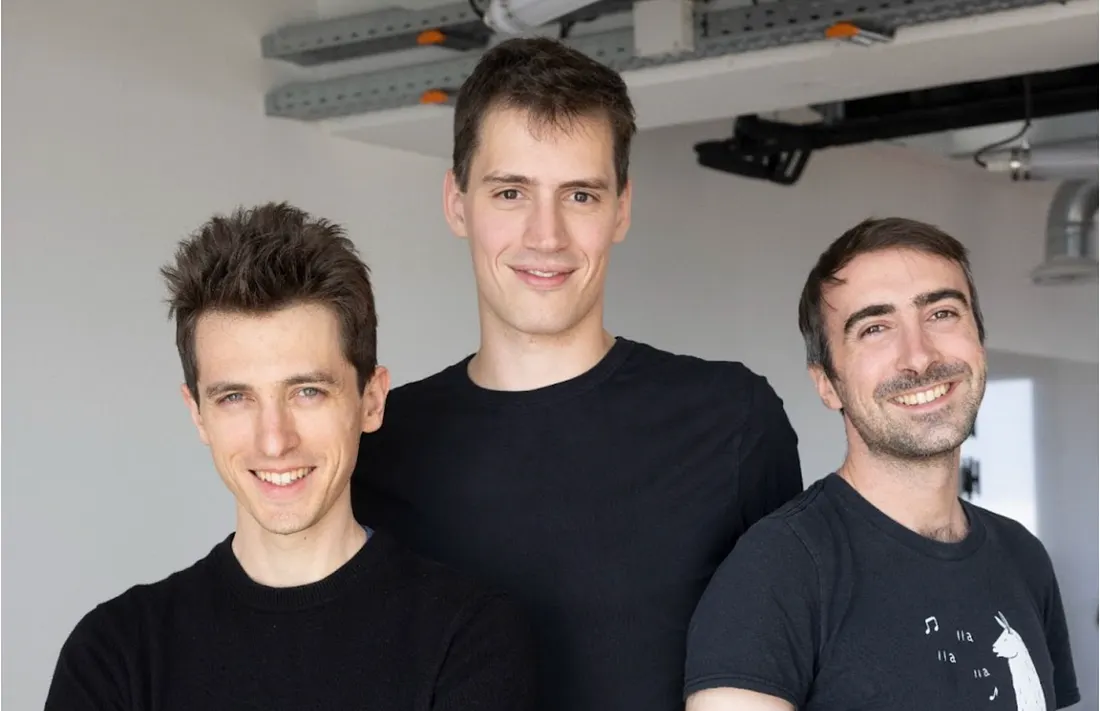
Mistral AI was founded by three French researchers and engineers: Arthur Mensch (former Google
DeepMind researcher), Guillaume Lample (ex-Meta AI scientist, specialist in transformers and language
models), and Timothée Lacroix (also ex-Meta).
Their vision is clear: build the best open-source LLMs in the world, and allow
companies, governments, and developers to integrate advanced AI without depending on closed systems controlled
by non-European actors.
In just a few months, Mistral raised more than 105
million euros, a record for a European AI startup at seed stage. This funding reflects the confidence
of investors in the capacity of Europe to catch up in the race of generative AI.
The choice of the name Mistral is symbolic: it refers to a powerful wind from the south of France, illustrating speed, strength, and independence.
- Mistral’s Core Models -
Since its creation, Mistral AI has already released several remarkable models:
+ Mistral 7B
The Mistral 7B model is a 7 billion parameter
dense transformer. Despite its relatively small size compared to giants like GPT-4, it has been optimized to be extremely
efficient and competitive on many benchmarks.
It is designed to be lightweight enough to run on fewer GPUs, making it attractive for research labs, startups,
and enterprises without massive infrastructure.
+ Mixtral 8x7B
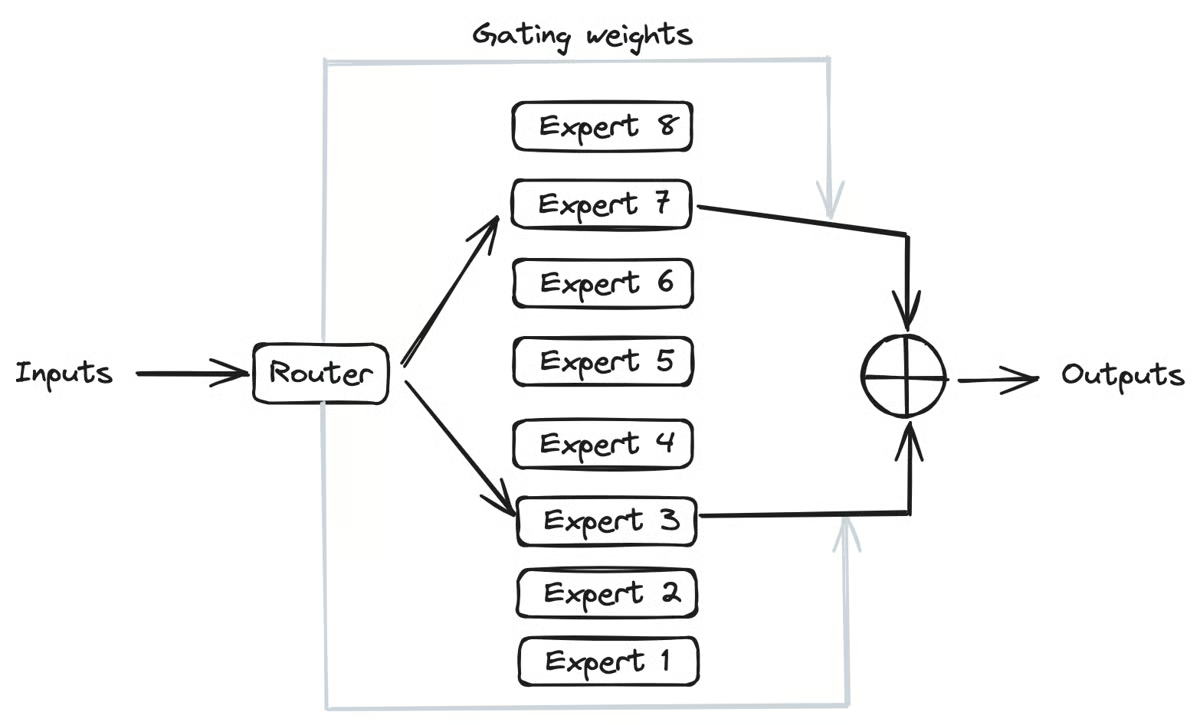
Released later, Mixtral 8x7B is a Mixture of Experts
(MoE) model. It is composed of 8 sub-models ("experts"), each with 7 billion parameters. However, only
2 experts are active per request, which significantly reduces the computational cost.
This design allows Mixtral to reach performance comparable to much larger
models (30–40B parameters), while consuming far less energy and hardware.
+ Mistral Large (2024)
Released in March 2024, Mistral Large is Mistral's flagship frontier model, competing directly with GPT-4 and Claude 3 Opus. With approximately 123 billion parameters, it excels at complex reasoning, multilingual tasks, and long-document processing. Mistral Large 2, released in July 2024, improved further with a 128K-token context window and significantly better coding performance.
+ Codestral (2024)
Unveiled in May 2024, Codestral is a 22-billion-parameter model trained specifically on over 80 programming languages. It supports fill-in-the-middle (FIM) completions - a feature particularly useful in code editors - and was designed to outperform general-purpose models on coding tasks. Codestral quickly became the default model powering Mistral's coding integrations in editors like VS Code and JetBrains.
+ Mistral NeMo 12B (2024)
Co-developed with NVIDIA and released in July 2024, Mistral NeMo is a 12-billion-parameter model designed specifically for enterprise deployment on NVIDIA's infrastructure. It uses a 128K-token context window and a new tokenizer called Tekken, which handles multilingual and technical text more efficiently than the tokenizer used in Mistral 7B.
+ Pixtral 12B (2024)
Pixtral 12B, released in September 2024, marked Mistral's entry into multimodal AI. It can process both text and images - analyzing charts, documents, photographs, and diagrams - making it the first Mistral model to go beyond text. Pixtral supports variable image resolutions and can handle multiple images in a single prompt, a flexibility that proprietary competitors took years to match.
+ Mistral Small 3 (2025)
Released in January 2025, Mistral Small 3 is a 24-billion-parameter model optimized for latency-sensitive applications. It delivers performance comparable to Mistral Large on many benchmarks while being deployable on a single consumer-grade GPU. This makes it a practical choice for local deployment, edge AI, and real-time applications where cost and inference speed are critical.
- Architecture of Mistral Models -
Like most modern LLMs, Mistral is based on the
transformer
architecture, introduced in 2017 by Google researchers in the paper "Attention Is
All You Need".
The transformer uses a mechanism called self-attention to process long sequences
of text efficiently, capturing both local and global dependencies between words.
The originality of Mistral lies in:
- Optimized attention mechanisms for speed and memory efficiency.
- Use of sliding window attention to handle long contexts (more than 8k tokens).
- Application of sparse activation in Mixtral, where only a subset of experts are activated per prompt.
Here’s a simplified code example of loading Mistral 7B from Hugging Face:
from transformers import AutoModelForCausalLM, AutoTokenizer

model_name = "mistralai/Mistral-7B-v0.1"
tokenizer = AutoTokenizer.from_pretrained(model_name)
model = AutoModelForCausalLM.from_pretrained(model_name)

prompt = "Explain why open-source AI matters for Europe."
inputs = tokenizer(prompt, return_tensors="pt")
outputs = model.generate(**inputs, max_length=200)

print(tokenizer.decode(outputs[0]))
This simple example shows how accessible Mistral models are to the community, reinforcing their open-source DNA.
- Applications of Mistral Models -
The potential applications of Mistral models are numerous:
+ Chatbots and Virtual Assistants
Mistral models power conversational applications ranging from customer service bots to internal enterprise assistants. Because the models can be self-hosted, businesses in regulated sectors - banking, insurance, healthcare - can deploy them without sending sensitive data to third-party API providers. Le Chat, Mistral's own consumer chatbot, launched in 2024 and reached millions of users within weeks, demonstrating the viability of an open-weight model as a product in its own right.
+ Code Generation and Developer Tools
Codestral has been integrated into VS Code, JetBrains, and Neovim plugins, offering autocomplete and fill-in-the-middle capabilities across more than 80 programming languages. Developers working in Python, Rust, Julia, or SQL - languages underserved by models trained mostly on JavaScript and Python - have found Codestral particularly valuable. Its low latency (under 2 seconds for most completions) makes it competitive with GitHub Copilot in real-world coding workflows.
+ Data Analysis and Document Intelligence
With context windows of up to 128K tokens and Pixtral's image-understanding capabilities, Mistral models can process entire contracts, annual reports, or research papers in a single prompt. Law firms use them for due diligence, banks for regulatory filings, and consultancies for competitive intelligence. The ability to run these workflows on-premises - rather than routing sensitive documents to US-hosted APIs - is often the decisive factor for European clients.
+ Education and Research
Universities and research labs fine-tune Mistral on specialized corpora - clinical notes for medical NLP, legal judgments for jurisprudence analysis, scientific papers for literature review. The open weights enable truly custom models, not just API-level prompt engineering. Several European national AI initiatives have adopted Mistral as a base for building sovereign, domain-adapted models in their own languages.
+ European Digital Sovereignty
This is perhaps Mistral's most strategically important application. European institutions - from the French government to the European Commission - face a dilemma: the most capable AI tools are controlled by foreign corporations subject to foreign law. Mistral offers a credible alternative: a model of comparable capability, built in Europe, deployable on European infrastructure, and subject to European data governance rules. France has already designated Mistral as a strategic national AI asset, and several EU member states have explored using Mistral-based models for public sector applications.
- Advantages of Mistral -
- Open-source: all models are publicly available on Hugging Face.
- Efficiency: small but powerful, optimized to run on fewer GPUs.
- Transparency: unlike closed models, Mistral encourages auditability and reproducibility.
- Cost-effective: enterprises can deploy them locally, reducing API costs.
- Sovereignty: Europe gains independence in the AI arms race.
- Limitations of Mistral -
Despite its strengths, Mistral faces challenges:
- Scale gap at the frontier: Mistral Large is competitive, but models like GPT-4o and Claude 3.5 Sonnet still lead on some reasoning and instruction-following benchmarks, reflecting the advantage of larger training budgets.
- Multimodal breadth: Pixtral 12B introduced vision capabilities in 2024, but Mistral still lacks audio, video, and native speech support that larger competitors have been building for longer.
- Funding gap: US frontier labs raise billions per round. While Mistral raised over €1 billion by 2024 (valuation of ~€6 billion), the gap in raw capital for training runs remains significant.
- Ecosystem maturity: Mistral has fewer fine-tuned community variants and integrations compared to the Llama or OpenAI ecosystems, though the gap is closing quickly as adoption grows.
- Regulatory navigation: Operating under the EU AI Act introduces compliance requirements that US-based competitors, outside EU jurisdiction, do not face on their home turf.
- The European AI Ecosystem -
Mistral is not alone. Europe also has initiatives like:
- Aleph Alpha (Germany) → building sovereign European AI platforms.
- Hugging Face France → open-source backbone of NLP.
- Bloom → an open multilingual LLM trained by 1000+ researchers worldwide.
Together, these initiatives prove that Europe is determined to be a serious player in generative AI.
- Ethics and Responsible AI -
Mistral emphasizes responsible AI:
- Bias reduction: models are audited for fairness.
- Open evaluation: researchers can test models freely.
- European regulations: aligned with the upcoming EU AI Act.
- Future Prospects of Mistral -
In the coming years, Mistral aims to:
- Release larger LLMs rivaling GPT-4.
- Expand into multimodal AI (text + vision + speech).
- Strengthen partnerships with European governments and enterprises.
- Position itself as the default open-source alternative to US AI platforms.
- Conclusion -
Mistral AI is not just another startup. It represents a new vision for open, sovereign, and efficient AI. In less than a year, it has become a reference in
the field, proving that Europe can innovate and compete with the biggest players.
While challenges remain, especially in funding and scale, the Mistral project
embodies a wind of change in the world of artificial intelligence. For developers, companies, and policymakers,
it offers a credible alternative - powerful, transparent, and truly global.
In the years to come, we will undoubtedly hear more and more about Mistral. Just
like the wind it is named after, it may well reshape the AI landscape at high speed.
- Benchmark Comparison: Mistral vs. the Competition -
Numbers speak louder than marketing. Here is how Mistral models perform on standard academic benchmarks:
| Model | MMLU (5-shot) | HumanEval | HellaSwag | ARC-C | Size |
|---|---|---|---|---|---|
| Mistral 7B | 62.5% | 30.5% | 81.3% | 55.5% | 7.3 B |
| Llama 2 7B | 45.3% | 12.8% | 77.2% | 53.0% | 6.7 B |
| Llama 2 13B | 54.8% | 18.3% | 80.7% | 59.4% | 13 B |
| Mixtral 8×7B | 70.6% | 40.2% | 84.4% | 66.2% | 46.7 B total / ~13 B active |
| GPT-3.5-turbo | 70.0% | 48.1% | 85.5% | 65.0% | ~175 B |
Key takeaway: Mistral 7B outperforms Llama 2 13B - a model nearly twice its size - on MMLU, HumanEval, and HellaSwag. Mixtral 8×7B matches GPT-3.5-turbo while only activating ~13B parameters per token. Numbers sourced from Mistral AI's technical reports and independent evaluations.
- Sliding Window Attention: How Mistral Handles Long Contexts -
Standard self-attention has O(n²) complexity where n is sequence length - this makes long contexts prohibitively expensive. Mistral solves this with Sliding Window Attention (SWA):
- Window size: Each token attends only to the 4,096 preceding tokens instead of the entire sequence, capping the attention matrix at a fixed size.
- Layer stacking amplifies reach: With 32 stacked transformer layers, information propagates further at each layer. Layer 1 sees [t−4096, t]; layer 2 effectively sees [t−8192, t] - giving an effective attention span of 4,096 × 32 = 131,072 tokens.
- Memory savings: SWA reduces attention memory from O(n²) to O(n × w) where w is the window size.
- Grouped-Query Attention (GQA): Mistral shares key-value heads across multiple query heads, reducing memory and accelerating inference by ~30% compared to standard multi-head attention.
- Mixtral extension: Mixtral 8×7B extends the context window to 32,768 tokens natively.
- References -
- Jiang, A. et al. (2023). "Mistral 7B." arXiv:2310.06825.
- Jiang, A. et al. (2024). "Mixtral of Experts." arXiv:2401.04088.
- Vaswani, A. et al. (2017). "Attention Is All You Need." arXiv:1706.03762.
- Shazeer, N. et al. (2017). "Outrageously Large Neural Networks: The Sparsely-Gated Mixture-of-Experts Layer." arXiv:1701.06538.
- Beltagy, I. et al. (2020). "Longformer: The Long-Document Transformer." arXiv:2004.05150.
- Frequently Asked Questions -
Q: Is Mistral 7B truly open-source?
Yes. Mistral 7B was released under the Apache 2.0 license, allowing unrestricted commercial and research use. Mixtral 8×7B is also Apache 2.0. However, newer models like Mistral Large are proprietary and only accessible via API.
Q: How does Mixture of Experts reduce compute cost?
In Mixtral 8×7B, each token is routed to only 2 of the 8 experts by a learned gating network. Although the total parameter count is 46.7 billion, only ~13 billion are activated per token - giving large-model quality at small-model cost.
Q: Can I run Mistral models locally?
Yes. Mistral 7B requires approximately 14 GB of VRAM in float16, or ~4 GB with 4-bit quantization (GGUF format via llama.cpp). Mixtral 8×7B needs ~26 GB quantized. Both run on consumer GPUs like the RTX 4090.
Q: How does Mistral 7B compare to Llama 2?
Mistral 7B outperforms Llama 2 13B - a model nearly twice its size - on MMLU (62.5% vs. 54.8%), HumanEval (30.5% vs. 18.3%), and HellaSwag (81.3% vs. 80.7%). Key innovations: sliding window attention, grouped-query attention, and better training data curation.
Comments