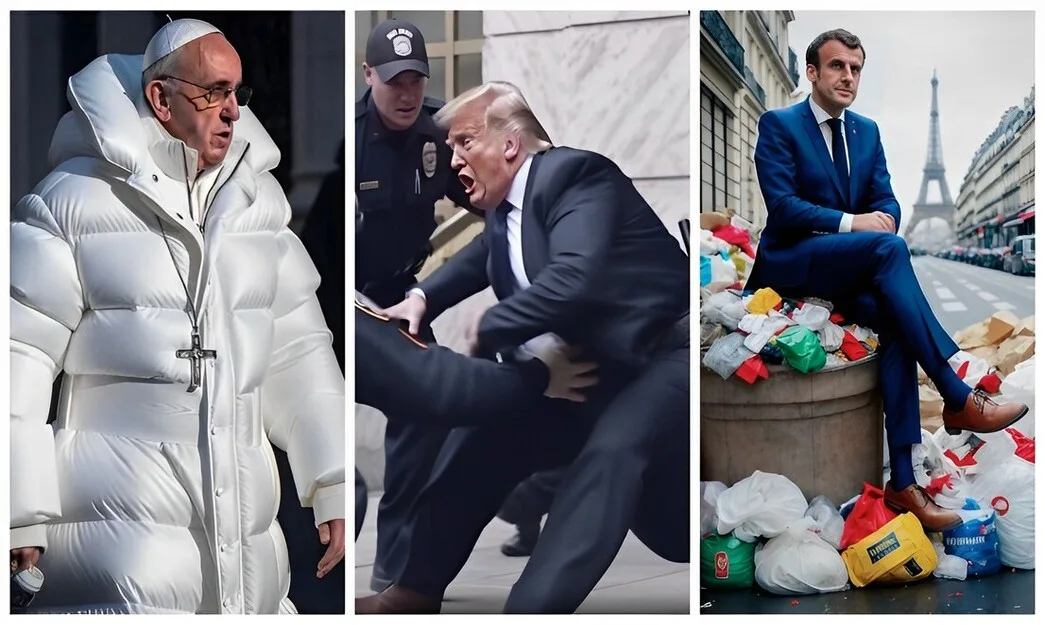
Midjourney: Reshaping the Visual Landscape Through AI Imagination

Over the past few years, AI-generated art has moved from experimental research projects into a mainstream creative tool used by millions. Among the platforms leading this revolution is Midjourney, a small independent research lab that has had an outsized cultural impact. Unlike most tech startups, Midjourney operates without venture capital, relying instead on a community-driven subscription model. Despite its size, the company has become one of the most recognized names in generative AI, reshaping how people think about creativity, art, and imagination.
- The Origins of Midjourney -
The company was founded by David Holz, a serial entrepreneur best known as the co-founder of Leap Motion. Holz left the traditional startup path after 12 years in the VR space, seeking a smaller, research-focused environment where creativity and experimentation could flourish. This philosophy gave birth to Midjourney, which operates with just a handful of full-time employees but a massive global community of contributors and users.
Midjourney’s main product is an AI system that transforms text prompts into images. Access is primarily offered through a Discord server, where users type commands describing the image they want. In seconds, Midjourney generates a set of high-quality images, blending learned patterns from its training data with stylistic innovation. This simple yet powerful setup has helped Midjourney become one of the most used creative AI platforms in the world.
- How Midjourney Works: The Technology Behind the Magic -
At its core, Midjourney is powered by diffusion models - a cutting-edge technique in generative AI. Diffusion models work by starting with random noise and gradually refining it into a coherent image, guided by patterns learned during training. When a user enters a text prompt, Midjourney uses a language–vision embedding model to map the words into a latent space that connects text with visual concepts. The diffusion model then interprets this latent representation and iteratively constructs an image that matches the description.
This process is computationally expensive but highly flexible. It allows Midjourney to not only produce
photorealistic images but also highly stylized, surreal, or artistic outputs that feel distinctly different from
competitors like DALL·E or Stable Diffusion. In fact, many
artists describe Midjourney's outputs as being more "aesthetic" or "artistic" compared to its rivals, which
often focus more on realism. The model has evolved significantly over successive versions: Version 5 (released in 2023) introduced photorealistic rendering and better hand
anatomy, while Version 6 added improved text rendering and finer control over
composition through parameters like aspect ratio (--ar), style (--style), and chaos
(--chaos) for variability.
- The Shift to the Web Interface and V6 -
For its first few years, Midjourney was exclusively accessed through Discord, which presented a steep learning curve for users unfamiliar with the chat app's interface and slash commands. Recognizing the need for a more intuitive user experience, Midjourney gradually rolled out a dedicated web interface in 2024. This web app allows users to generate, organize, and tweak images visually, using sliders and buttons instead of complex text parameters.
Coupled with the release of the V6 model, which dramatically improved photorealism, dynamic lighting, and the ability to render coherent short text, Midjourney cemented its position as the leading tool for high-end AI art generation. Features like "Style Reference" and "Character Reference" further empowered creators to maintain consistent aesthetics across multiple generations, making the tool indispensable for graphic novels, concept art, and brand design.
- Midjourney vs. Competitors -
The AI art ecosystem is competitive, with several platforms offering similar capabilities. However, each comes with its own philosophy:
- Midjourney: Focused on artistry and imagination, producing images with strong stylistic flair.
- Stable Diffusion: Fully open-source, allowing anyone to customize and run the model locally.
- DALL·E: Developed by OpenAI, tightly integrated with ChatGPT, with a focus on accessibility and safety.
This diversity of approaches reflects broader debates in AI: openness vs. control, artistry vs. realism, and research vs. commercialization. Midjourney has chosen a middle path - not fully open-source but still accessible, with an emphasis on community engagement.
- Ethical Challenges and Concerns -
Like all AI art tools, Midjourney raises important ethical and legal questions. Who owns an AI-generated artwork - the user, the company, or no one at all? Can AI art infringe on copyright if it mimics the style of human artists? These questions are still being debated in courts and policy circles worldwide.
Another challenge is the potential misuse of AI-generated imagery. Deepfakes, misinformation, and biased outputs are real risks. Midjourney’s approach is to produce images that retain subtle artifacts of their AI origin, which some see as an implicit watermark. However, as the technology advances, distinguishing human-made from AI-generated art will become increasingly difficult.
- The Future of AI Creativity -
Despite challenges, the potential of AI-generated art is enormous. Midjourney is already influencing fields like graphic design, marketing, film pre-visualization, game development, and digital storytelling. By lowering the barrier to creation, it enables anyone - not just professional artists - to explore visual ideas at unprecedented speed.
Looking forward, Midjourney’s vision extends beyond a single product. Holz and his team describe their work as part of a larger mission: augmenting human creativity with AI. As new versions of Midjourney are released, with higher resolution, faster rendering, and more nuanced interpretation of text prompts, the line between human imagination and machine-generated artistry will blur even further.
Whether one sees it as a tool, a collaborator, or a competitor, one thing is certain: Midjourney is reshaping the visual landscape and pushing us to rethink what creativity means in the age of AI.
As the technology continues to mature and new models are released at an ever-increasing pace, the conversation around AI art will only deepen. Midjourney has shown that machine-generated imagery is not just a novelty - it is a serious creative medium with lasting implications for art, design, commerce, and culture. The companies, creators, and communities that engage thoughtfully with these tools today will be the ones best positioned to shape the future of visual expression.
- Prompt Engineering Cheatsheet: Key Parameters -
Midjourney offers granular control through text parameters appended to your prompt. Mastering these is what separates casual users from power users:
| Parameter | Syntax | Effect |
|---|---|---|
| Aspect ratio | --ar 16:9 | Changes output dimensions. Common: 16:9 (landscape), 9:16 (portrait), 3:2 (photo). Default is 1:1. |
| Stylize | --stylize 100 | Controls artistic interpretation (0–1000). Low values = literal interpretation; high values = more abstract and artistic. Default 100. |
| Chaos | --chaos 50 | Adds variation across the 4 generated images (0–100). Higher = more diverse results per generation. |
| Quality | --quality 1 | Render time and detail level (0.25, 0.5, 1, 2). Higher = more GPU time, finer detail. |
| No (negative) | --no trees | Negative prompting - tells the model to avoid specific elements in the output. |
| Seed | --seed 12345 | Fixes the random seed for reproducible results. Same prompt + same seed = same image. |
| Tile | --tile | Creates seamless tileable patterns, useful for textures, wallpapers, and fabric designs. |
| Style raw | --style raw | Reduces Midjourney's default artistic processing for a more literal, photographic interpretation. |
- Version History and Capabilities -
| Version | Release | Resolution | Key capabilities |
|---|---|---|---|
| V1 | Feb 2022 | 256×256 | First public beta; abstract, painterly outputs |
| V2 | Apr 2022 | 512×512 | Improved coherence, better anatomy |
| V3 | Jul 2022 | 512×512 | More detailed scenes, stronger composition |
| V4 | Nov 2022 | 1024×1024 | Photorealism jump, better hands, new architecture |
| V5 | Mar 2023 | 1024×1024 | Near-photorealistic quality, accurate hands/fingers |
| V5.2 | Jun 2023 | 1024×1024 | "Zoom Out" feature, improved aesthetics |
| V6 | Dec 2023 | 1024×1024 | Text rendering in images, improved prompt understanding |
| V6.1 | Jul 2024 | Up to 2048×2048 | Personalization (--p), Style Reference (--sref), Character Reference (--cref), improved upscaling |
| V7 | Apr 2025 | Up to 4096×4096 (with upscale) | Dramatic quality leap; photographic sharpness; new Draft mode (fast preview); much stronger text in images; web-first interface |
- Midjourney in 2024–2025: What Changed -
Between V6.1 and V7, Midjourney introduced several features that fundamentally changed how users interact with the platform:
- Style Reference (
--sref): Attach a reference image URL to transfer its artistic style (colour palette, brushwork, lighting) to your generation - without copying the content. For example:a sunset --sref [image URL] --sw 100. - Character Reference (
--cref): Maintain a consistent character across multiple generations. Provide a reference image of a person or character and use--cref [URL]to carry the face and physical features into new scenes and poses. - Personalization (
--p): After rating ~200 image pairs to calibrate aesthetic preferences, Midjourney builds a personal "taste profile." Adding--pto any prompt biases generations towards your preferred visual style without changing the prompt. - Web Interface & Direct API: Midjourney moved away from Discord as its primary interface. The midjourney.com web app provides a visual gallery, real-time generation, and image management. A direct API for developers was announced for 2025.
- Video generation (Midjourney Video): In late 2024, Midjourney began rolling out video generation capabilities - animating a static image into a short clip - competing directly with Runway, Sora, and Kling.
- V7 Draft Mode: A new "Draft" quality tier renders a preview in seconds at reduced quality, letting users iterate on composition quickly before committing to a full-quality generation.
- How Diffusion Models Generate Images - Step by Step -
Midjourney, like DALL·E and Stable Diffusion, relies on diffusion models. Here is a simplified breakdown of the four-stage pipeline:
- Text encoding: The text prompt is processed by a language model (similar to CLIP) that converts the words into a high-dimensional numerical vector capturing the semantic meaning of the description.
- Forward diffusion (training phase): During training, the model learns by progressively adding Gaussian noise to real images over many steps until they become pure random noise. The model then learns to reverse each noise step - effectively learning how to "denoise" an image.
- Reverse diffusion (generation): Starting from pure random noise, the model iteratively denoises the image over 20–50 steps, guided by the text embedding at each step. At each iteration, it predicts and removes a small amount of noise, gradually revealing a coherent image that matches the prompt.
- Upscaling: The initial generation is typically produced at a lower resolution in a compressed "latent space." A separate super-resolution model then upscales it to the final output size (1024×1024 or higher).
- References -
- Ho, J., Jain, A., & Abbeel, P. (2020). "Denoising Diffusion Probabilistic Models." arXiv:2006.11239.
- Rombach, R. et al. (2022). "High-Resolution Image Synthesis with Latent Diffusion Models." arXiv:2112.10752.
- Midjourney Documentation. docs.midjourney.com.
- Radford, A. et al. (2021). "Learning Transferable Visual Models From Natural Language Supervision." (CLIP) arXiv:2103.00020.
- Black Forest Labs (2024). "FLUX.1 Technical Blog." blackforestlabs.ai.
- Midjourney V7 Release Notes (2025). docs.midjourney.com.
- Frequently Asked Questions -
Q: Is Midjourney open-source?
No. Unlike Stable Diffusion, Midjourney is proprietary and closed-source. Users access it through Discord or the web interface via paid subscriptions ranging from $10 to $120 per month depending on the plan.
Q: Who owns images generated with Midjourney?
Paid subscribers own the images they generate and can use them commercially. Free trial users receive a Creative Commons Noncommercial 4.0 license. Midjourney retains the right to use generated images for service improvement and promotional purposes.
Q: How does Midjourney compare to DALL·E 3?
Midjourney V6 excels at artistic, stylized outputs and offers granular control via parameters (--stylize, --chaos, --ar). DALL·E 3 integrates tightly with ChatGPT for conversational refinement and tends toward photorealism. Both can render text in images, though DALL·E 3 is generally more reliable at it.
Q: Can I use Midjourney for commercial work?
Yes. All paid plans include commercial usage rights. The Basic plan ($10/month) includes approximately 200 generations. The Pro plan ($60/month) includes unlimited relaxed-mode generations and a "Stealth Mode" that keeps your prompts and images private from the public gallery.
Comments